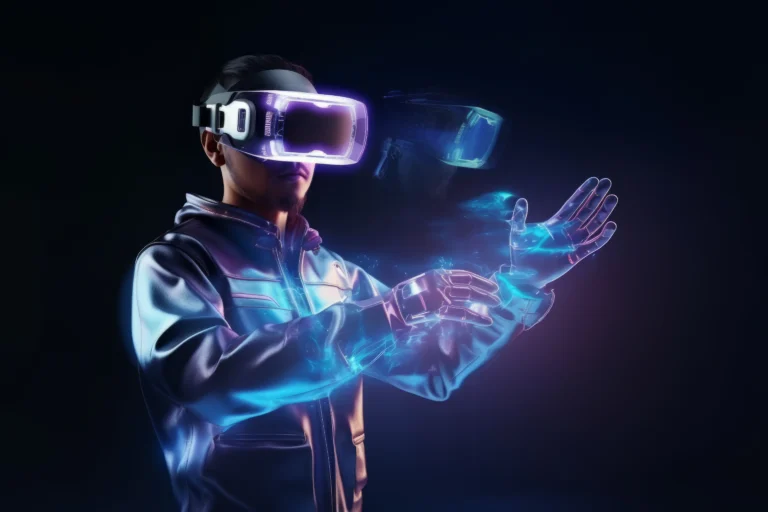
The tracking of augmented reality objects has changed from printed static markers to moving real-time objects for a more accurate and engaging experience. Current augmented reality technologies have grown considerably. Devices can now detect, track, and map moving objects in three-dimensional space, allowing for augmented experiences in gaming, industrial training, navigation, and retail. Tracking moving real-time objects greatly improves the accuracy, latency, and context awareness of augmented reality; thus, tracking moving real-time objects becomes an essential component of next-generation augmented reality applications.
Key Benefits of Using Real-Time AR Markers and Motion Tracking
Advantages of Real-Time Moving Object Markers
- Accurate tracking- Real-time AR markers enhance spatial precision, even when the target is moving erratically.
- Lower latency– AR motion tracking technologies reduce latency, enabling a seamless interaction with the AR object.
- Dynamic user engagement– Dynamic target movement enhances the immersive AR experience, as the user is able to intuitively interact with the AR platform.
Real-time fish eye markers and motion tracking enable AR systems to reliably identify moving objects while minimizing latency or lag and enhancing user immersion. Recent advancements in AR computer vision and sensor fusion create an application where responsiveness ways improve, making AR interaction smooth and engaging for industries like gaming, automotive, and retail.
How Computer Vision Powers Real-Time Moving Object Tracking
1. Machine Learning for Object Recognition
Machine learning models help AR systems recognize and classify moving objects with high accuracy. These models learn shapes, colors, and motion patterns, allowing robust AR marker detection even in complex environments with low lighting or background noise.
2. Feature Extraction and Motion Analysis
Feature extraction algorithms track edges, textures, and key points that stay consistent as objects move. Combined with motion analysis, AR devices predict object trajectory, ensuring overlays remain stable even during fast or erratic movements.
3. Sensor Fusion for Enhanced Stability
AR systems merge data from multiple sensors camera, gyroscope, accelerometer, and depth sensors. This sensor fusion creates more stable augmented reality object tracking by continuously correcting positional errors and improving spatial accuracy.
4. Depth Mapping and Spatial Understanding
Depth sensors and LiDAR help AR applications measure distances accurately. With real-time depth mapping, AR overlays adjust automatically to the object’s size, position, and motion, providing realistic and contextually accurate augmented experiences.
5. Predictive Tracking Algorithms
Algorithms such as Kalman filters predict where an object will move next, reducing tracking loss. Predictive models are essential for fast-paced AR applications like sports analytics, navigation, and interactive gaming.
Real-World Applications of Moving Objects in AR Systems
1. AR-Based Sports Training
Moving balls, players, or equipment can act as markers in AR sports systems. By tracking motion in real time, athletes receive instant feedback on swing angles, speed, and movement patterns—enhancing training accuracy.
2. Industrial Machine Monitoring
AR can track moving parts in manufacturing equipment to visualize maintenance data or detect abnormalities. Engineers can view real-time motion overlays to improve safety, reduce downtime, and optimize operations.
3. Interactive Retail Experiences
Retailers use AR to track moving items like shopping carts or handheld products. Customers enjoy interactive product details, dynamic pricing, or virtual try-on experiences that respond instantly to object movement.
4. AR Navigation and Robotics
Robots, drones, or vehicles act as moving markers for AR-assisted navigation systems. Real-time AR markers improve route visualization, obstacle detection, and operational precision in logistics, defense, and autonomous transportation.
5. AR Gaming and Entertainment
Games now use real-world moving objects as interactive triggers—for example, toys, hand gestures, or tools. AR overlays react dynamically to motion, creating highly immersive gaming environments.

CEO & MD
The CEO and Managing Director at Vizent Solutions, Bigyan Kar, leads a team of talented technology professionals who excel in the development and implementation of next-generation 3D visualization solutions for the following areas: gaming, architecture, AR/VR, CAD, and interactive simulations. Through his knowledge of digital design and technology, as well as his commitment to providing the highest level of immersive, accurate, and reliable 3D experiences for its clients, Vizent is constantly innovating and pushing the boundaries of the 3D modeling and visual storytelling industries.