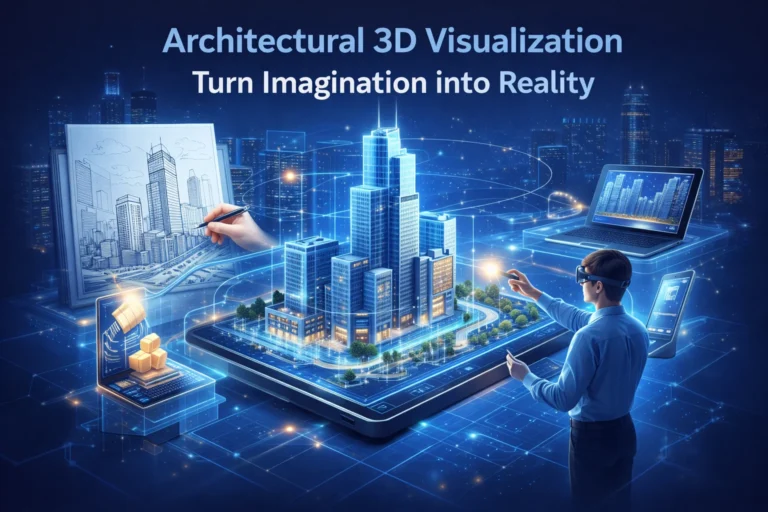
Architecture 3D visualization has revolutionized how ideas move from concept to construction. Instead of relying on flat drawings, architects and developers now present lifelike visuals that showcase materials, lighting, scale, and spatial relationships. With advanced architectural rendering services, stakeholders can visualize the outcome before building begins. This approach improves design accuracy, reduces errors, accelerates approvals, and helps clients confidently understand how a project will look and feel in real life.
What Is Architecture 3D Visualization and Why It Matters
Architecture 3D visualization uses digital tools to create realistic representations of buildings and spaces. Through professional architectural rendering services, designers convert technical plans into visually compelling models that improve clarity, communication, and decision-making throughout the project lifecycle.
Core Components of 3D Architectural Rendering
3D architectural rendering combines accurate modeling, realistic textures, lighting simulation, and camera perspectives. These elements work together to produce visuals that reflect real-world scale and materials, allowing architects and clients to evaluate designs with precision before construction begins.
Difference Between 2D Drawings and 3D Visualization
Unlike 2D drawings, architectural 3D visualization presents depth, realism, and context. Clients can instantly understand proportions, finishes, and spatial flow, eliminating confusion and misinterpretation that often occurs with traditional floor plans and elevations.
Role of Visualization in Modern Architecture
In modern architecture, visualization is not optional—it is essential. Architecture 3D visualization helps align creative intent with technical feasibility, enabling teams to refine designs early, reduce revisions, and deliver outcomes that meet both aesthetic and functional expectations.
Industries That Benefit from 3D Architectural Rendering
Real estate, commercial development, hospitality, urban planning, and interior design all rely on 3D architectural rendering. These visuals enhance marketing, streamline approvals, and improve collaboration between architects, engineers, and investors across industries.
Types of Architectural Rendering Services Available
Architectural rendering services cover a wide range of visualization needs, from exterior facades to immersive walkthroughs. Each rendering type serves a unique purpose, helping stakeholders experience the design at different levels of detail and realism.
- Exterior 3D architectural rendering
- Interior 3D visualization
- 3D floor plan rendering
- Architectural 3D walkthrough and animation
Exterior 3D Architectural Rendering
Exterior architecture 3D visualization highlights building facades, landscaping, lighting, and surroundings. These visuals are widely used for planning approvals and real estate marketing, helping viewers understand how the structure fits within its environment.
Interior 3D Visualization Services
Interior 3D architectural rendering focuses on layouts, materials, furniture, and lighting. It allows designers and clients to experiment with finishes and décor options, ensuring interiors are both functional and visually cohesive before execution.
3D Floor Plan Rendering
3D floor plan rendering transforms technical layouts into easy-to-understand visuals. By combining clarity with realism, architecture 3D visualization helps buyers and stakeholders grasp room relationships, circulation, and space utilization instantly.
Architectural Walkthroughs and Animations
Architectural walkthroughs provide immersive experiences by simulating movement through spaces. These animations enhance presentations, allowing clients to feel the scale and flow of a project long before construction begins.
Benefits of Architecture 3D Visualization for Projects
Architecture 3D visualization offers tangible benefits throughout the design and construction process. From minimizing costly revisions to improving stakeholder communication, 3D architectural rendering ensures projects stay aligned with expectations.
| Benefit | Impact on Project | Outcome |
| Design Clarity | Visual accuracy improves understanding | Fewer design revisions |
| Client Engagement | Realistic visuals enhance trust | Faster approvals |
| Cost Efficiency | Errors identified early | Reduced rework costs |
Improved Client Communication
With 3D visualization, clients can clearly see the outcome instead of imagining it. This transparency builds trust, encourages feedback, and ensures all stakeholders share the same vision from the beginning.
Faster Decision-Making Process
3D architectural rendering accelerates decisions by presenting clear visual data. Clients and investors can evaluate design options quickly, reducing delays caused by misunderstandings or repeated design changes.
Reduced Design Errors and Risks
By visualizing a project in detail, architects can detect spatial conflicts and material issues early. Architecture 3D visualization minimizes construction errors, saving time, money, and resources.
Stronger Marketing and Sales Presentations
High-quality architectural rendering services produce visuals that attract buyers and investors. Realistic imagery and animations enhance marketing campaigns, increasing engagement and conversion rates for real estate projects.
How Architecture 3D Visualization Supports Project Lifecycle
From concept development to final presentation, architectural 3D visualization supports every stage of a project. It bridges the gap between design intent and execution, ensuring consistency and clarity throughout.
Concept Development Stage
During early design, 3D architectural rendering helps explore massing, form, and layout options. Designers can experiment creatively while maintaining technical accuracy, resulting in stronger concepts.
Design Refinement and Approvals
Detailed architecture 3D visualization assists in refining materials, lighting, and spatial arrangements. These visuals simplify approval processes by clearly communicating the design to authorities and clients.
Construction and Coordination Support
3D visualization acts as a reference during construction, reducing ambiguity. Contractors and engineers benefit from clear visuals that complement technical drawings and improve coordination on site.
Post-Construction Marketing Use
After completion, architectural rendering services continue to add value. Visuals are reused for promotions, portfolios, and future marketing materials, extending the return on investment.
Frequently Asked Questions

CEO & MD
The CEO and Managing Director at Vizent Solutions, Bigyan Kar, leads a team of talented technology professionals who excel in the development and implementation of next-generation 3D visualization solutions for the following areas: gaming, architecture, AR/VR, CAD, and interactive simulations. Through his knowledge of digital design and technology, as well as his commitment to providing the highest level of immersive, accurate, and reliable 3D experiences for its clients, Vizent is constantly innovating and pushing the boundaries of the 3D modeling and visual storytelling industries.